
Designing a home is not just about looks—it’s about how spaces feel and function over time. While Vastu Shastra is often associated with beliefs and rituals, many of its principles align closely with sound architectural planning, climate response, and human psychology.
In this blog, we’ll break down Vastu tips for home design that actually work, viewed purely from an architectural perspective, so you can make informed decisions without compromising design quality.
Why Architects Don’t Ignore Vastu Completely?
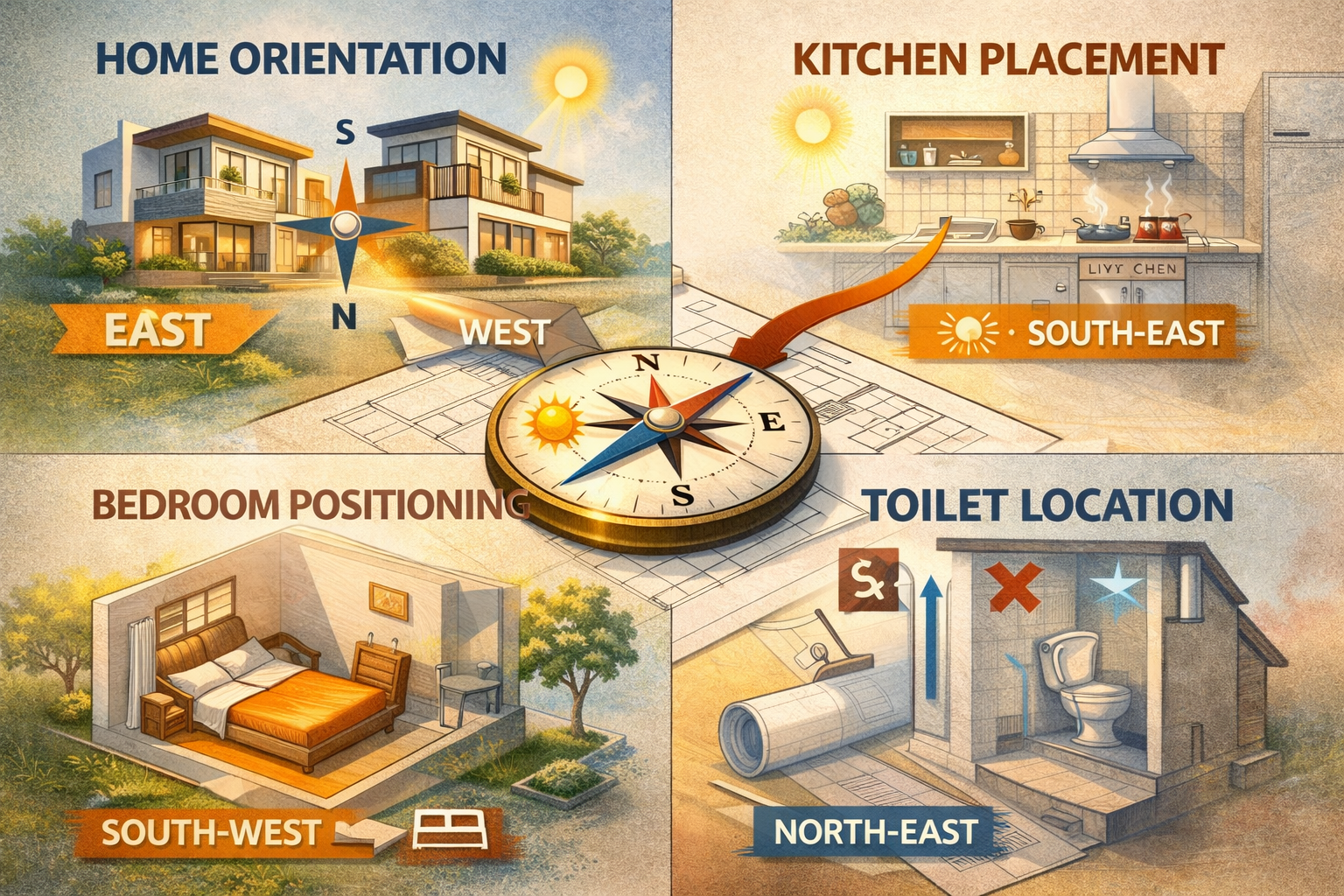
Visual guide explaining key Vastu tips for home design from an architectural planning perspective.
As architects, we don’t treat Vastu as magic—but we also don’t dismiss it blindly. Many Vastu tips for home design evolved from practical observations related to:
-
Sun movement
-
Wind direction
-
Thermal comfort
-
Hygiene and privacy
-
Daily movement patterns
When applied logically, these principles often enhance comfort, energy efficiency, and usability.
1. Home Orientation: More Than Just Belief
One of the most effective Vastu tips for home design is proper orientation.
Architectural logic:
-
East & North-facing homes receive softer, consistent daylight
-
Morning sunlight improves indoor air quality and mental well-being
-
Reduced dependency on artificial lighting
👉 This is why most architects prefer aligning living areas toward the north or east, not because of belief, but because of natural light optimization.
2. Entrance Placement That Improves Flow
Vastu emphasizes the main entrance—and so does architecture.
What actually works:
-
Clear visual access from entrance to living space
-
No sharp turns or obstacles immediately after entry
-
Well-lit, ventilated foyer
These Vastu tips for home design improve:
-
Psychological comfort
-
Movement efficiency
-
First impression of space
A poorly planned entrance often feels cramped and unwelcoming—something both Vastu and architecture aim to avoid.
3. Kitchen Placement Based on Heat Management
Traditional Vastu suggests placing kitchens in the southeast.
Architectural reasoning:
-
Southeast receives early sunlight, ideal for kitchens
-
Heat-generating spaces are best away from bedrooms
-
Better smoke and odor dispersion
Among all Vastu tips for home design, this one aligns most closely with thermal zoning, a key architectural concept.
4. Bedroom Position for Better Rest
From an architect’s lens, bedrooms must be:
-
Quiet
-
Thermally stable
-
Private
That’s why southwest bedrooms often work better:
-
Less direct harsh sunlight
-
More structural stability
-
Reduced street noise
These practical Vastu tips for home design improve sleep quality—without any rituals involved.
5. Toilets: Hygiene Over Myths
Vastu advises avoiding toilets in the northeast—and architecture agrees.
Why?
-
Northeast zones are ideal for light, ventilation, and open spaces
-
Toilets need controlled ventilation and privacy
-
Poor placement can affect indoor air quality
When architects apply these Vastu tips for home design, it’s about hygiene, airflow, and zoning, not fear.
6. Staircase Placement & Structural Sense
Staircases should never dominate the center of a home.
Architect-approved reasons:
-
Blocks light and airflow
-
Creates awkward circulation
-
Disrupts spatial balance
Many Vastu tips for home design suggest staircases in the south or west, which aligns well with load distribution and space planning.
7. Natural Light & Ventilation: Core of Vastu and Architecture
If there’s one area where Vastu and architecture fully agree, it’s this.
Effective Vastu tips for home design always emphasize:
-
Cross ventilation
-
Openings in north & east
-
Courtyards or light wells
These strategies reduce energy bills, improve health, and make homes feel alive.
8. What Architects Usually Ignore in Vastu
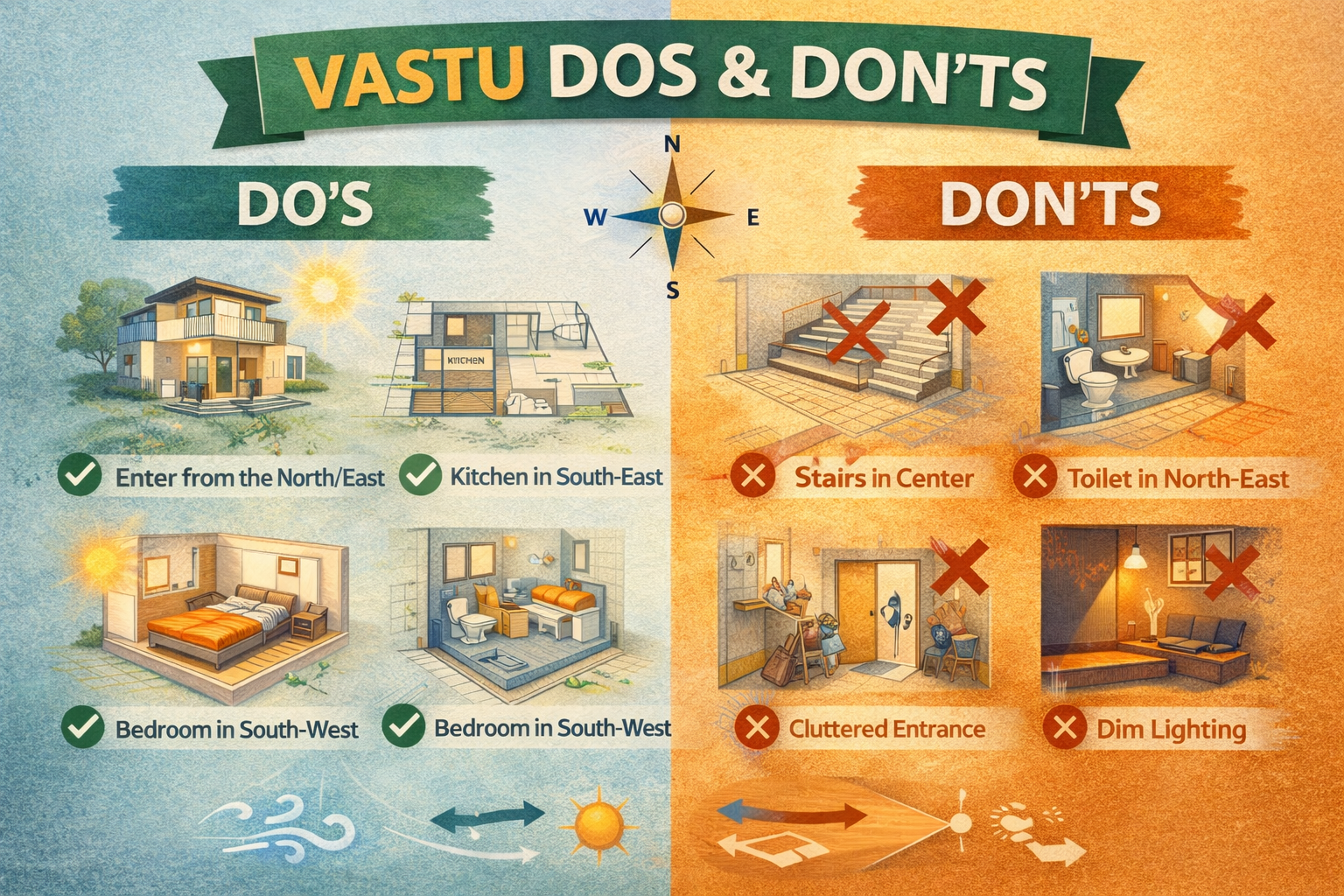
Architect-approved Vastu dos and don’ts for home design focusing on layout, light, ventilation, and functionality.
Not all Vastu rules are practical.
Architects generally avoid:
-
Excessive color restrictions
-
Fear-based doshas
-
Forcing layouts that harm functionality
Real Vastu tips for home design should support architecture, not restrict it.
How to Apply Vastu Without Ruining Design
✔ Use Vastu as a guideline, not a rulebook
✔ Prioritize function, climate, and lifestyle
✔ Make small adjustments instead of redesigning everything
✔ Consult an architect who understands both design and Vastu
Final Thoughts
The best Vastu tips for home design are the ones that improve light, ventilation, comfort, and movement. When viewed from an architectural perspective, Vastu becomes less about superstition and more about timeless design wisdom.
A well-designed home doesn’t just follow Vastu—it feels right to live in.
0 Comments