
Ancient architectural principles:
In today’s fast-paced world, modern homes often prioritize aesthetics and technology, sometimes overlooking timeless design wisdom. By incorporating ancient architectural principles, homeowners can create spaces that are not only beautiful but also functional, sustainable, and harmonious. These principles, refined over centuries, focus on natural elements, spatial balance, and human well-being, proving that the old and the new can coexist seamlessly
1. Orientation and Sunlight Optimization
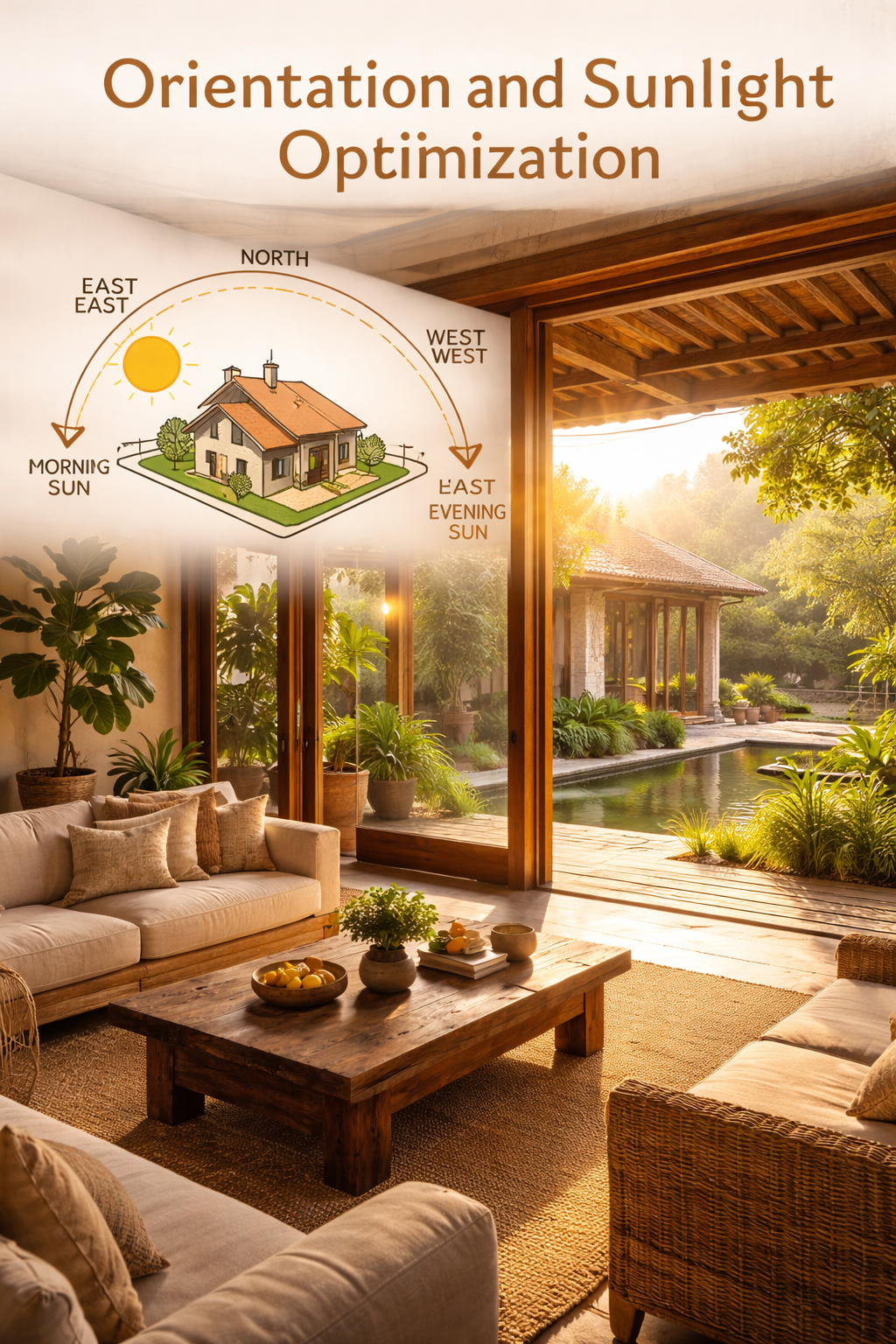
“Orientation and sunlight optimization inspired by ancient architectural principles to enhance natural light, energy efficiency, and indoor comfort.”
One of the most important ancient architectural principles is proper building orientation. Ancient builders carefully positioned homes to maximize natural sunlight and airflow. For modern homes, aligning rooms with the sun’s path improves energy efficiency, reduces the need for artificial lighting, and enhances mood. Think of living rooms facing east for morning light or using shaded courtyards to stay cool in summer.
2. Courtyards and Open Spaces
Many traditional homes, from Indian havelis to Roman villas, relied on central courtyards to connect indoor and outdoor spaces. Incorporating courtyards in modern homes follows the ancient architectural principles of ventilation, natural lighting, and social interaction. Courtyards can serve as gardens, play areas, or meditation spaces, creating a serene oasis in urban settings.
3. Use of Natural Materials
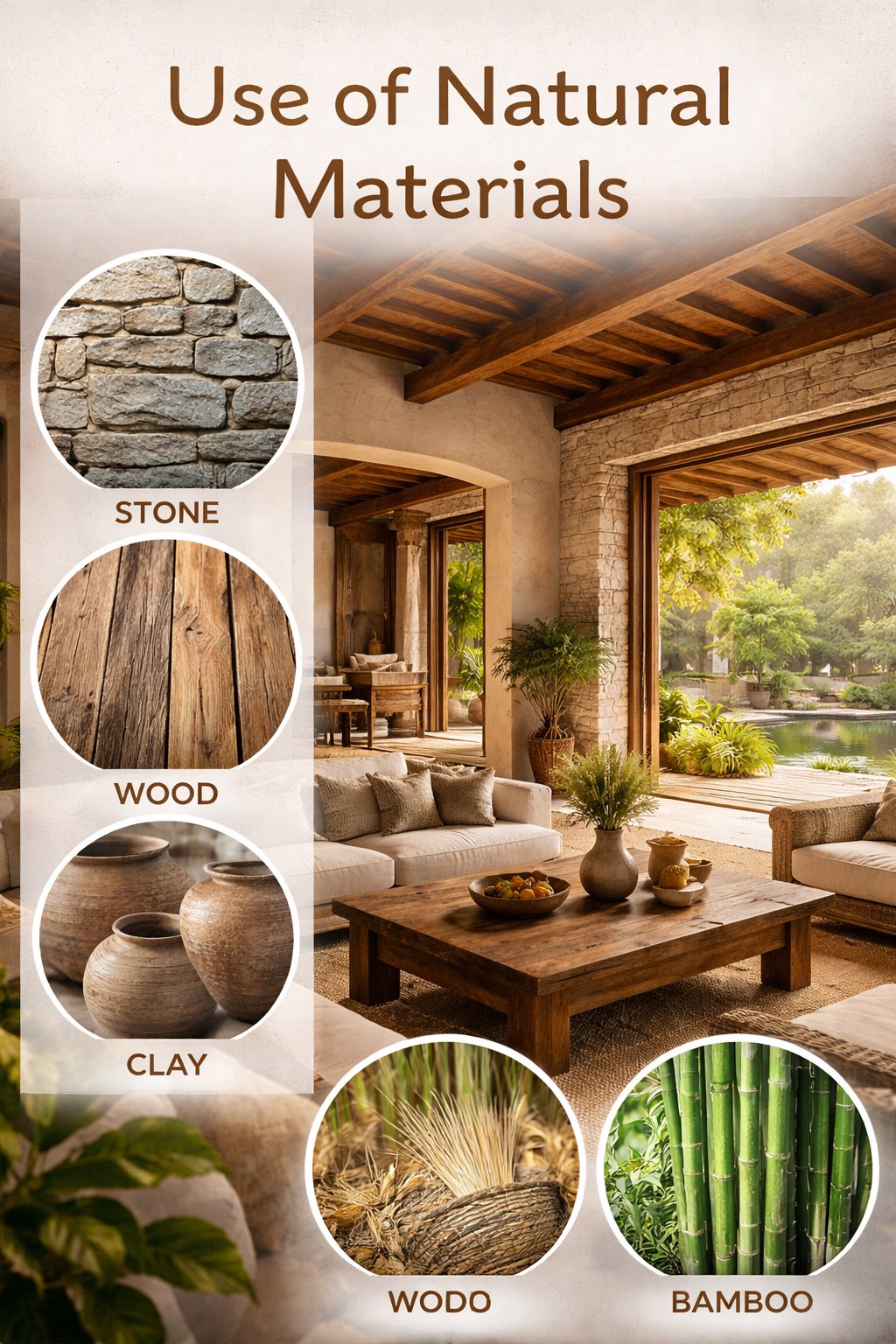
“Use of natural materials such as stone, wood, clay, and bamboo reflects ancient architectural principles that promote sustainability and timeless design.”
Ancient builders primarily used stone, clay, bamboo, and wood—materials that were locally sourced and environmentally friendly. Applying ancient architectural principles in modern design encourages using natural and sustainable materials, which not only reduce carbon footprint but also enhance indoor air quality. Exposed wooden beams, stone walls, or clay flooring can bring warmth and authenticity to contemporary homes.
4. Proportions and Symmetry
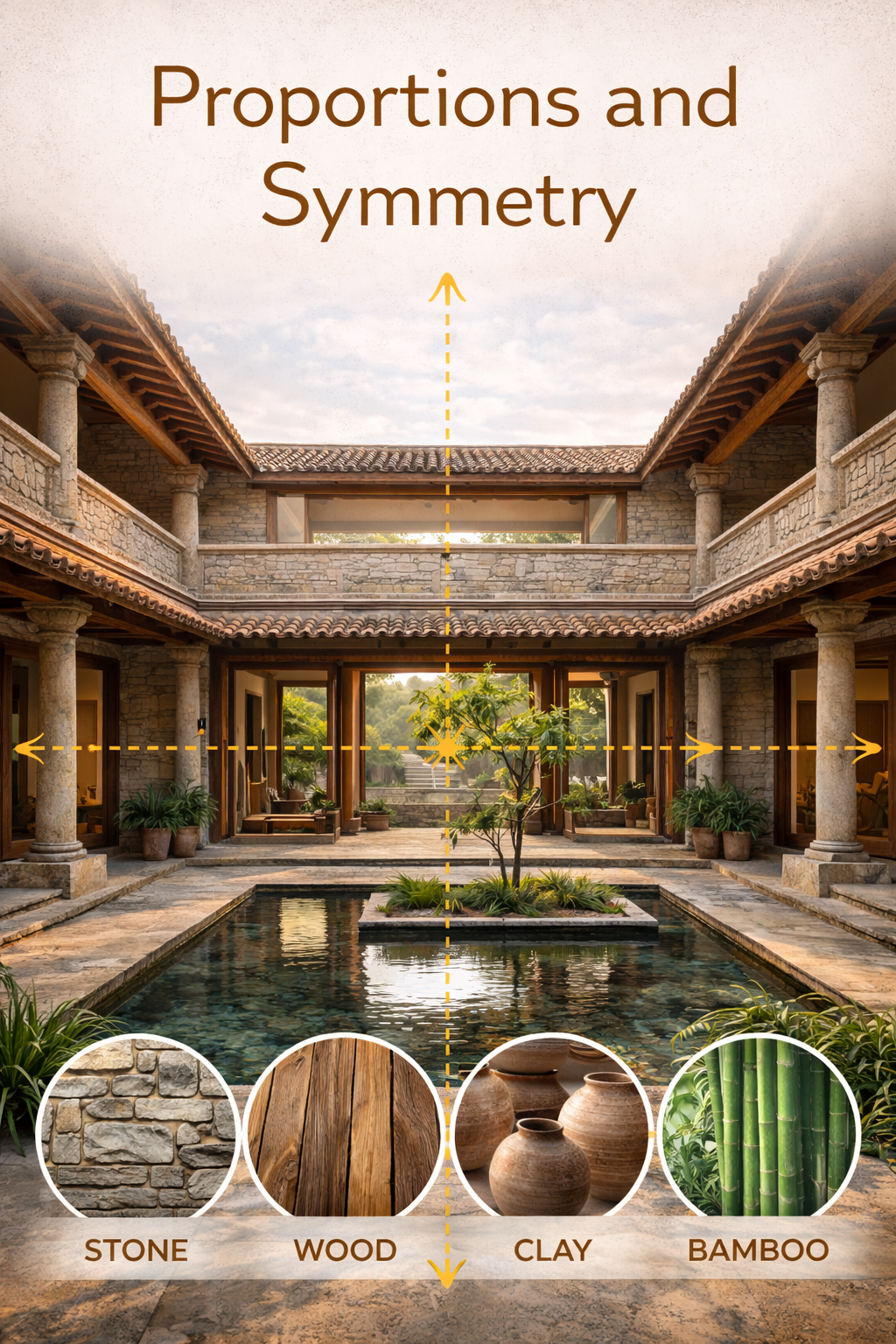
“Proportions and symmetry based on ancient architectural principles create visual balance, harmony, and a timeless sense of order in modern homes.”
The idea of balanced proportions and symmetry is a core element of ancient architectural principles. From Greek temples to Mughal palaces, structures were designed to maintain harmony between different elements. Modern homes can adopt these concepts by designing rooms and furniture layouts with proportional dimensions, creating spaces that are visually pleasing and psychologically calming.
5. Integration with Nature
Finally, connecting living spaces with nature is a timeless ancient architectural principle. Ancient architects designed homes around trees, water bodies, and natural landscapes to foster peace and sustainability. Modern homes can embrace this by incorporating indoor plants, green walls, terraces, or water features, creating a natural flow that improves air quality, mental health, and overall well-being.
Conclusion
By adopting these ancient architectural principles, modern homeowners can create spaces that are functional, sustainable, and harmonious. These time-tested techniques prove that modern design doesn’t have to sacrifice tradition; instead, blending ancient wisdom with contemporary aesthetics results in homes that are truly timeless.
0 Comments