
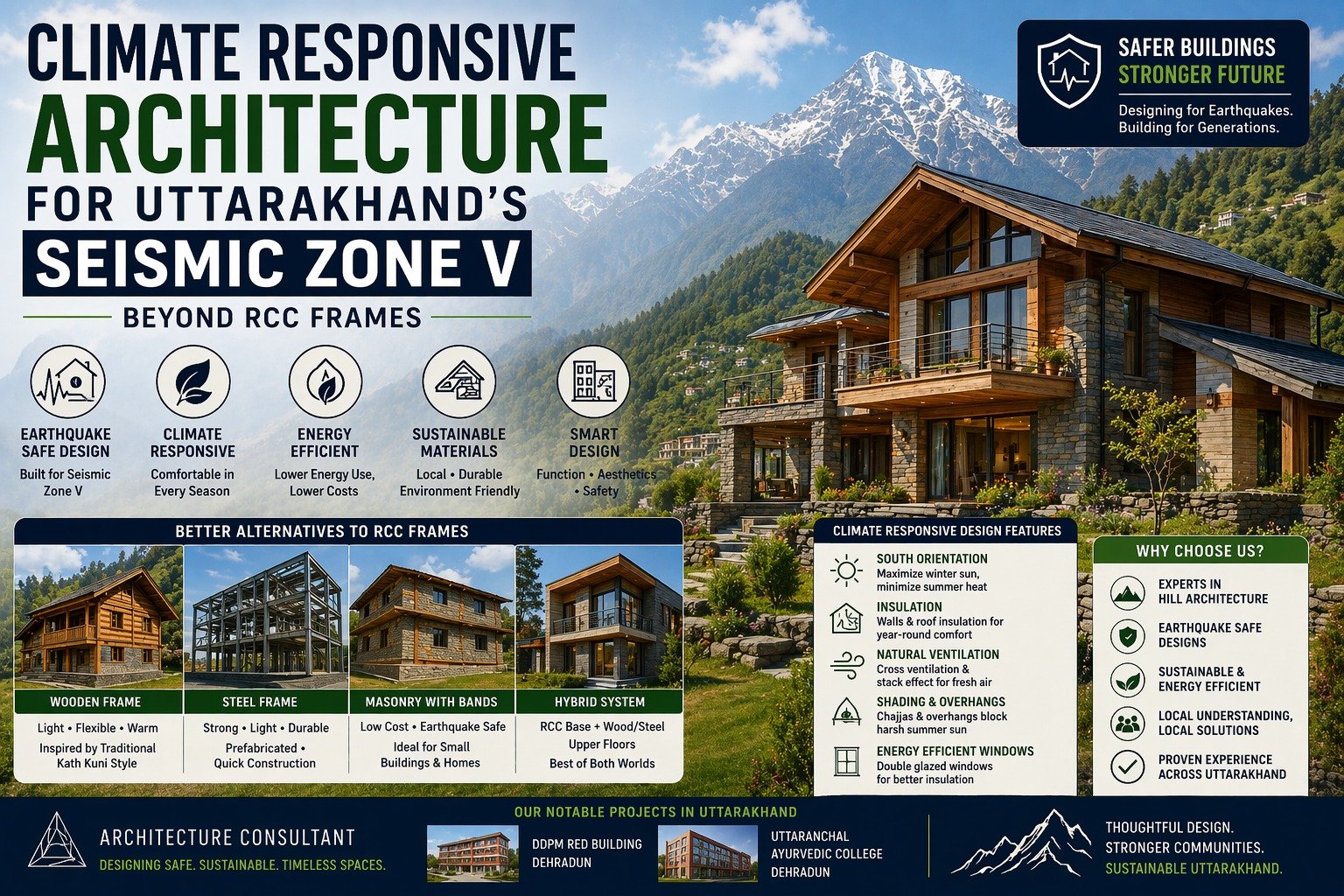
Climate responsive architecture in Uttarakhand ensures earthquake safe, energy efficient buildings in Seismic Zone V using smart design, insulation and sustainable materials.
Uttarakhand is a beautiful state with mountains, forests, and rivers. But it is also located in Seismic Zone V, the highest earthquake risk zone in India. This means every building here must be designed to survive strong shaking. Most people think RCC or concrete frames are enough. But the truth is, RCC alone is not sufficient. You need climate responsive architecture that is both earthquake safe and energy efficient.
At Architecture Consultant, we have designed many buildings in Uttarakhand including the DDPM Red Building and the Uttaranchal Ayurvedic College. We use a mix of modern and traditional techniques to create buildings that are safe, comfortable, and beautiful.
Understanding Seismic Zone V in Uttarakhand
Seismic Zone V means very high damage risk. The entire state of Uttarakhand falls in this zone. Earthquakes here can be as strong as magnitude 8 or more. In the past, the 1991 Uttarkashi earthquake and the 1999 Chamoli earthquake caused widespread damage.
The problem is not just the shaking. The soil also behaves differently. In some areas, the soil can turn into liquid during an earthquake. This is called liquefaction. In hilly areas, landslides are a big risk. So your building must be designed for the specific soil and slope of your site.
Why RCC Frames Alone Are Not Enough
RCC frames are strong, but they are also heavy. Heavy buildings experience more force during an earthquake. If the RCC frame is not designed properly, the columns can crack and the building can collapse. Many builders in Uttarakhand use cheap materials and poor construction methods. This makes the building dangerous.
Another problem is that RCC buildings are not good for the climate. They get hot in summer and cold in winter. You end up using more electricity for cooling and heating. A climate responsive building uses natural ventilation, insulation, and shading to stay comfortable without too much energy.
Better Alternatives to RCC Frames
The first alternative is a wooden frame. Wood is light and flexible. During an earthquake, a wooden building moves with the shaking instead of fighting it. Wood also keeps the building warm in winter. Many traditional houses in Uttarakhand used wood. The Kath Kuni style is a good example.
The second alternative is a steel frame. Steel is strong and light. It can be designed to sway during an earthquake. Steel buildings can also be prefabricated and assembled quickly. The third alternative is a masonry building with horizontal bands. This is a low cost option for small buildings.
For large buildings like schools and hospitals, you can use a hybrid system. RCC for the foundation and ground floor, and wood or steel for the upper floors. This gives you the best of both worlds.
Climate Responsive Design Features for Uttarakhand
Orientation is very important. In Uttarakhand, the sun is in the south during winter. So your main windows should face south. This brings in free heat. In summer, the sun is high in the sky. You can use overhangs or chajjas to block the direct sun.
Use insulation in your walls and roof. Insulation keeps heat out in summer and heat in winter. You can use materials like thermocol, glass wool, or even dry grass. Double glazed windows also help.
Natural ventilation is free and healthy. Design your building with windows on opposite walls so air can flow through. Use vents near the ceiling to let hot air escape. This is called stack ventilation. In hilly areas, you can also use the slope to direct cool air into your building.
How Architecture Consultant Designs for Uttarakhand
We do not copy designs from the plains. We study the climate, the soil, and the earthquake risk of your specific site. We then create a custom design that is safe and comfortable. We use local materials and local labor whenever possible. Our team has completed many projects across Uttarakhand. We are proud to be among the best architects in Dehradun and beyond.
Frequently Asked Questions
1. What is Seismic Zone V and why is Uttarakhand in this zone?
Seismic Zone V is the highest earthquake risk zone in India. Buildings here must survive very strong shaking. Uttarakhand is in this zone because it lies in the Himalayan foothills where two tectonic plates are colliding. This collision creates stress that is released as earthquakes.
2. Is RCC construction banned in Seismic Zone V?
No, RCC is not banned. But it must be designed and built correctly. The columns and beams should be the right size with the right amount of steel. The concrete should be of good quality. The building should also have shear walls for extra strength. Many builders skip these details, which is why RCC buildings fail.
3. What is the safest building material for earthquakes?
Wood is one of the safest materials because it is light and flexible. Steel is also very safe. For large buildings, a combination of steel and RCC works well. Traditional stone masonry is not safe unless it is reinforced with horizontal bands.
4. How can I make my existing building more earthquake resistant?
You can add steel braces to the walls. You can also add a concrete jacket around the columns. For a house, you can replace heavy roof tiles with lighter materials like metal sheets. You should also remove any heavy objects from high shelves. A structural engineer can inspect your building and suggest specific changes.
5. What is climate responsive architecture?
Climate responsive architecture means designing a building to work with the local climate instead of fighting it. In Uttarakhand, this means using south facing windows for winter sun, overhangs for summer shade, insulation for temperature control, and natural ventilation for fresh air. This reduces your electricity bill and makes the building more comfortable.
6. Do I need a special permit for building in Seismic Zone V?
Yes, your building drawings must be signed by a structural engineer. The local authority will check if the design follows the National Building Code. You may also need a soil test report. The permit process is stricter in Seismic Zone V. An experienced architect can help you get all the approvals.
7. What is the Kath Kuni style of construction?
Kath Kuni is a traditional Himalayan building style. It uses alternating layers of stone and wood. The wood acts like a shock absorber during an earthquake. The walls are thick and keep the building warm. Many old temples and houses in Uttarakhand are built in this style. It is both beautiful and earthquake resistant.
8. How much more does an earthquake resistant building cost?
An earthquake resistant building costs about 10 to 20 percent more than a normal building. This is because of better materials, more steel, and better construction methods. But this extra cost is small compared to the cost of repairing or rebuilding after an earthquake. It is a smart investment in safety.
9. Can I use local materials for earthquake resistant construction?
Yes, you can use local stone and wood. But you must use them correctly. Stone should be cut into regular shapes and laid with cement mortar. Wood should be treated against insects and rot. You should also add horizontal reinforced concrete bands at the floor and roof levels. A good architect can guide you.
10. Why should I choose Architecture Consultant for my project in Uttarakhand?
We have years of experience in Seismic Zone V. Our team includes structural engineers who specialize in earthquake resistant design. We also focus on climate responsive features to make your building comfortable and energy efficient. We have completed many projects across Uttarakhand. Visit our website to see our portfolio and contact us for a consultation.
0 Comments